Garage Door Sensor Repair in Rockville, MD
A door that starts down and reverses, or will not close at all, is often a safety sensor problem. Request a callback at any hour. A local technician realigns, clears, rewires or replaces the sensors, checks the door and the opener, and gives you the price first.
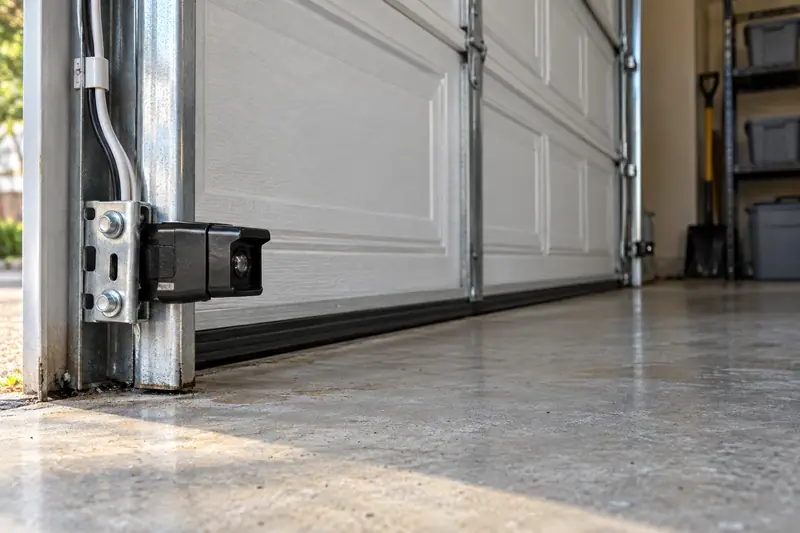
What garage door safety sensors do
Two small photo-eye sensors sit near the floor on each side of the opening, no more than six inches above the slab. One sends an invisible infrared beam and the other receives it. If the beam is blocked while the door is closing, the opener stops and reverses.
Openers made for sale in the United States since 1993 must have this second entrapment protection under the UL 325 standard, along with reversing when the door meets something solid. A door that will not close because of the sensors is doing its job until the fault is found.
Sensor problems by symptom
The door reverses before it reaches the floor
The opener started the door down, the beam was interrupted or the sensors lost alignment, and the opener sent the door back up. In Rockville the usual causes are snow or slush near the opening, a shovel leaned against the track or a bracket knocked out of line.
The door will not close and the opener light flashes
Most openers flash their light or show a code when the sensors are not seeing each other. One sensor's indicator light may be off or blinking.
The door only closes while you hold the wall button
Many openers allow a closing door while the wall button is held, even with a sensor fault. It is a temporary way to secure the garage, not a fix.
Why sensors fail in Rockville
- Snow, slush and shovels Snow piled at the opening or slush on the lens blocks the beam.
- Knocked out of line A bin, a bike or a car door bumps a bracket.
- Cold, damp wiring In unheated garages, moisture and cold make the wire brittle, staples cut it and mice chew it.
- A failed sensor Sensors wear out, and older openers may need a matched pair.
Never bypass or tape over the sensors to make the door close. They stop a closing door from landing on a child or a pet.
What you can check safely
- Clear the path Move anything on the floor between the sensors, including snow.
- Look at the lights Steady usually means aligned; blinking or off means a problem. Patterns vary by brand.
- Wipe the lenses A soft dry cloth removes slush and dust.
If the door still reverses, stop using the opener to close it and call.
How sensor repair is done
- 01
Check alignment and mounting
Brackets tightened, sensors aimed at each other.
- 02
Check the wiring
A sensor that works some days and not others is often a wiring fault.
- 03
Replace if needed
With sensors compatible with the opener.
- 04
Test
The beam is blocked while the door closes, and the safety reverse is tested with an object on the floor.
Opener brands and compatible sensors
LiftMaster and Chamberlain openers share a sensor design, Genie uses its own, and older openers from other makers have theirs. Sensors are not interchangeable between brands, and a new opener comes with its own pair. When a sensor has failed on an older opener, the technician checks whether a compatible replacement is still made. If the opener itself is at fault, opener repair covers the diagnosis.
When the door causes the reverse
A door that binds in a cold track, rubs a cracked hinge, has a seal frozen to the slab or is out of balance can also stop and reverse, because the opener senses the extra force. The door is run by hand during the visit to rule that out.
You hear the price before the work. There is more on garage door repair here in Rockville.
Testing the sensors once a month
Close the door and pass a broom handle through the beam while it is moving down; it should stop and reverse. Then lay a piece of two-by-four flat in the doorway and close the door; it should reverse when it touches the wood. If either test fails, stop using the opener to close the door.
Reading the sensor lights
On LiftMaster and Chamberlain sensors, the sending eye shows an amber light and the receiving eye a green light. A green light that is off or flickering means the beam is not lined up or is blocked. Genie sensors use their own pair of lights, usually red and green, with the same meaning. If both lights are off, the sensors may have no power, which points to the wiring or the opener.
Sensors and new openers
Sensors are matched to the opener. When an old opener is replaced, its sensors usually go too, because the new unit needs its own pair to run. That is part of the price you hear before the work, so there are no surprises on the day.
After any sensor repair, the door is closed several times from the wall button and the remotes to confirm it closes every time.
Snow, ice and the sensors
In winter, snow pushed against the side of the opening can block the beam, and ice on the lenses has the same effect. Clear the snow away from both sensors and wipe the lenses dry before assuming they have failed. If the door still reverses, the technician checks the alignment and the wiring, which can loosen as the garage freezes and thaws.
Sensor questions
Why does my door reverse only in winter?
Snow, slush or ice near the sensors, or a frozen bottom seal, are the usual reasons.
Can I bypass the sensors?
No. They are a required safety system.
Do I need new sensors?
Not always. Many problems are alignment, wiring or a blocked lens.
Will any sensors work with my opener?
They must suit the opener's brand and age; the technician checks.
Talk it through with a person, any hour.
Request a callbackEvery day, at all hours (Eastern time). A person answers at any hour, asks what the door is doing, and sets up a visit with an independent local garage door technician who works Rockville.